

close
Choose Your Site
Global
Social Media
Views: 0 Author: Site Editor Publish Time: 2026-06-18 Origin: Site


In civil engineering and structural design, the integrity and longevity of buildings, bridges, and industrial facilities depend heavily on the quality of their load-transfer and movement-control components. Rubber bearings and rubber pads have become indispensable elements, providing essential functions such as vibration damping, thermal expansion accommodation, and seismic isolation. As global infrastructure ages and new projects demand higher safety standards, understanding the proper selection, installation, and maintenance of these elastomeric products becomes critical.
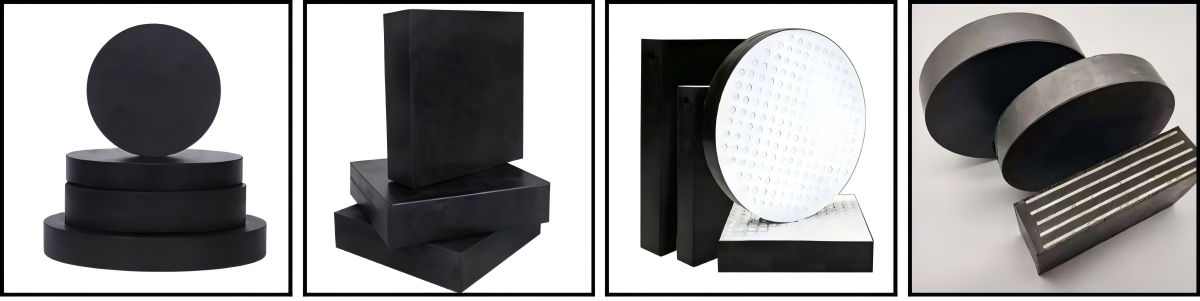
Types and structural configurations of rubber bearings and pads
Critical performance attributes and material considerations
Product Quality Assurance and Application Scene Reference
Guidelines for selecting the appropriate bearing or pad for your project
Conclusion and maintenance recommendations
Rubber bearings and pads are broadly classified by their internal reinforcement and shape. The most common types include plain elastomeric pads (unreinforced), laminated steel-reinforced bearings, and specialized high-damping or lead-core bearings for seismic applications.
Plain rubber pads are solid blocks of natural or neoprene rubber, used for light to moderate loads, such as in prefabricated building panels or small footbridges. Their primary role is to distribute vertical loads evenly and allow minor horizontal movements.
Laminated rubber bearings consist of multiple layers of rubber bonded to internal steel plates, providing high vertical stiffness while maintaining low horizontal shear stiffness, enabling large lateral displacements – a crucial feature for bridge expansion joints and earthquake-resistant designs.
High-damping rubber bearings (HDRB) incorporate special compounds that dissipate energy through internal friction, reducing seismic forces transmitted to the superstructure.
Lead-rubber bearings (LRB) combine laminated rubber with a central lead core, offering both elasticity and hysteretic damping for extreme seismic events.
Each type has specific load ratings, displacement capacities, and durability profiles. The choice depends on the structure’s weight, expected movement range, environmental conditions, and design life. For instance, bridges in coastal areas often require neoprene compounds with added anti-ozone agents, while inland projects may use natural rubber for better fatigue resistance.
When evaluating rubber bearings and pads, engineers focus on several quantifiable parameters, including compressive stiffness, shear modulus, damping ratio, creep resistance, and aging characteristics. The rubber compound itself – whether natural rubber (NR), polychloroprene (neoprene, CR), or ethylene-propylene-diene monomer (EPDM) – determines the product’s response to temperature, UV exposure, and chemical attack.
Compressive stiffness affects how much the bearing deforms under vertical load. Excessive deformation can compromise structural stability, so design codes typically limit compressive strain to 10-15% of the total rubber thickness.
Shear modulus governs lateral flexibility. A lower shear modulus allows greater horizontal movement, which is desirable for seismic isolation but may require additional restraint systems.
Damping ratio measures energy dissipation. Higher damping reduces vibration amplitudes but can increase heat generation under cyclic loading – a trade-off that must be analyzed for each application.
Material quality is equally vital. Reputable manufacturers perform rigorous tests on tensile strength, elongation at break, and adhesion between rubber and steel layers. The bonding integrity is particularly important for laminated bearings, as delamination can lead to premature failure. Furthermore, accelerated aging tests (e.g., oven aging at 70°C for 14 days) help predict service life. In practice, well-made rubber bearings can last 50 years or more with proper maintenance, though replacement cycles vary based on load history and environmental factors.
The quality of rubber bearings and pads depends not only on the selection of raw materials, but also on process control during production and thorough inspection before shipment. At the same time, understanding the common application scenes of these products helps in selecting the right product type according to actual needs.
During production, multiple stages can affect the quality of the final product. From raw material intake to finished product dispatch, every step deserves attention.
Raw material inspection: The core materials of rubber bearings and pads are rubber compound and internal reinforcing steel plates (for laminated products). When raw materials enter the factory, it is advisable to conduct sample tests on basic properties such as rubber hardness and tensile strength, while also confirming that the steel plate thickness and surface treatment meet requirements. A good start contributes to overall success, and the consistency of raw materials has a direct impact on final product quality.
Mixing and molding control: During rubber mixing, the proportions of various additives, as well as mixing temperature and time, should be kept within reasonable ranges. During molding, the tightness of the bond between rubber and steel plates, and the absence of air bubbles or delamination, are key factors affecting product durability. Experienced operators will pay attention to these details during production to ensure batch to batch consistency.
Vulcanization process: Vulcanization is the key step in achieving the final properties of rubber products. Appropriate vulcanization temperature and time allow the rubber molecular chains to form a proper cross linked network, resulting in good elasticity and strength. Either insufficient or excessive vulcanization may affect product performance. Therefore, continuous monitoring of vulcanization conditions is an important part of quality control during production.
Pre shipment testing: Before dispatch, products typically undergo a series of routine tests to confirm that their basic performance meets requirements. Common test items include visual inspection, dimensional measurement, hardness testing, and sample testing of the adhesion between rubber and steel plates. Only products that pass these tests are cleared for packaging and shipment. Test records are kept on file for future traceability.
Rubber bearings and pads find applications in many fields due to their good elasticity and vibration damping properties. Several typical scenes are listed below for reference:
Bridges and elevated roadways
This is one of the more common application areas for rubber bearings. In bridge structures, bearings are typically placed between the piers and the superstructure, carrying vertical loads while accommodating horizontal displacement and rotation caused by temperature changes, vehicle braking, and other factors. Laminated rubber bearings and high damping bearings are relatively common in such scenes.
Building structures
In large buildings (such as sports stadiums, exhibition centers, airport terminals, etc.), rubber bearings can be used for seismic isolation or vibration reduction design, helping to reduce the impact of seismic forces on the superstructure. In addition, in some industrial facilities where vibration control is a concern, rubber pads are also commonly used for equipment foundation isolation.
Industrial equipment installation
Rubber pads are often used as isolation elements between machinery and foundations, helping to reduce the transmission of vibration generated by equipment operation to the surrounding structures. Such applications have certain requirements for compression deformation and durability of the pads, but general loads are smaller, and plain elastomeric pads can meet most needs.
Rail transit
In rail transit systems such as subways and light rail, rubber bearings are sometimes used for vibration reduction and noise control in track structures. Such applications have relatively high requirements for aging resistance and fatigue durability of the material, and rubber compounds with better weather resistance are typically selected.
Other general scenes
At connection points of some small steel structures or prefabricated components, rubber pads are also often used as filling or adjusting elements, providing cushioning and uniform pressure distribution. Although these applications involve smaller loads, they have certain requirements for product dimensional accuracy and surface quality.
It should be noted that the selection of specific types and specifications for a given project should be based on actual loads, displacement requirements, and service environment. Different application scenes may have varying product requirements, so it is recommended to communicate fully with the supplier during the selection process.
Selecting the correct rubber bearing or pad involves a systematic trade-off between structural requirements, cost, and maintenance accessibility. A stepwise approach helps narrow down options:
Step 1 – Define load and movement data: Gather maximum vertical load (dead + live), horizontal shear force, thermal expansion range, and seismic design displacement. These figures are typically provided by the structural engineer.
Step 2 – Choose the rubber compound: Natural rubber offers excellent fatigue and low-temperature performance but is less resistant to oils and ozone. Neoprene provides moderate oil resistance and better weathering, while EPDM suits extreme temperature and chemical exposure. Match the compound to the site's microclimate and chemical environment.
Step 3 – Determine reinforcement type: If the expected horizontal displacement is relatively large, a laminated bearing with steel plates would be suitable; for smaller displacements, plain pads may suffice, helping to reduce initial cost.
Step 4 – Verify dimensional constraints: Check the available height (clearance) and plan area. Bearings must fit within the given space without impinging on adjacent components. Also, consider the need for uplift resistance – in some cases, a tie-down system becomes necessary.
Step 5 – Learn about product testing: Ask the supplier about routine testing items (such as hardness, tensile strength, and compression set) to gain a clearer understanding of product quality.
It is important to note that no single bearing solves every problem. Some projects combine different types – for example, using high-damping bearings at the abutments and plain pads at intermediate piers. Such hybrid systems often optimize performance and economy. Always consult with the bearing manufacturer early in the design phase, as custom designs may be needed for unique geometries or load cases.
Rubber bearings and rubber pads are proven, cost effective solutions for accommodating movements, reducing vibrations, and enhancing structural safety. Their reliability hinges on correct selection, high quality materials, and meticulous installation. While they require minimal routine upkeep, periodic inspections – at least every five years – are advisable. During inspections, check for surface cracking, uneven compression, extrusion, or loss of bond between rubber and steel. Replace any bearing that shows signs of degradation beyond acceptable limits as per design standards.
In an era of climate change and increasing seismic activity, the demand for durable elastomeric components will only grow. By adhering to factual engineering principles and avoiding exaggerated performance claims, project stakeholders can make informed decisions that ensure long term serviceability. Remember that a well maintained rubber bearing system contributes not only to safety but also to reduced life cycle costs – a benefit that far outweighs the initial investment.

