

close
Choose Your Site
Global
Social Media


| Quantity: | |
|---|---|


Rubber Waterstop
mingheng
Product Features
Good Elasticity:Adapts to thermal expansion, contraction,and uneven settlement of concrete, reducingleakage risk
Durability and Reliable Sealing:Good aging resistance, bonds tightly withconcrete to form a continuous waterproofbarrier
Easy Installation:Simply place at designed joint position; no complex procedures required
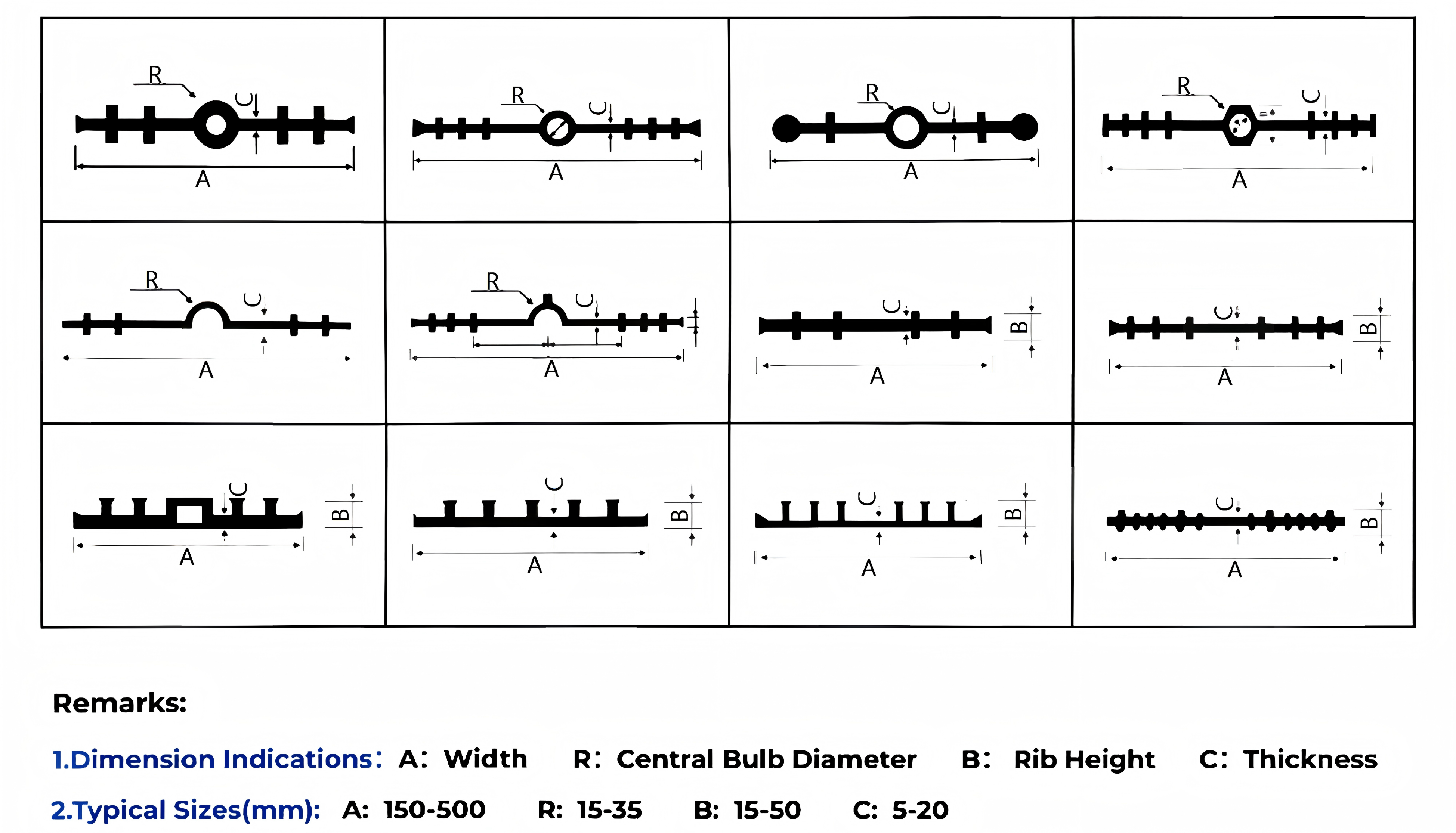
Customizable Parameters:Width, central bulb diameter, rib height, andthickness can be adjusted per project requirements
Product Description
When concrete is poured, the rubber waterstop is positioned across construction or expansion joints. After the concrete hardens, the waterstop becomes embedded within the structure. Its elastic body blocks water from passing through the joint. The middle bulb and ribs increase the sealing path length, making water penetration more difficult. Unlike a swellable waterstop that expands after contact with water, this rubber waterstop relies on its inherent resilience and compression force to maintain a tight seal even when the joint experiences slight movement. This mechanism ensures long-term waterproofing performance without depending on water absorption or chemical reactions. For projects where water pressure fluctuates or joints move periodically, a construction waterstop made of rubber provides consistent protection.
No. | Item | Parameter | |
| 1 | Hardness (Shore A) / degree | 60±5 | |
| 2 | Tensile strength / MPa | ≥10 | |
| 3 | Elongation at break / % | ≥380 | |
| 4 | Compression set / % | 70℃*24h,25% | ≤35 |
| 23℃*168h,25% | ≤20 | ||
| 5 | Tear strength / (kN/m) | ≥30 | |
| 6 | Brittleness temperature / ℃ | ≤-45 | |
| 7 | Heat aging70℃*168h | Change in hardness (Shore A) / degree | ≤+8 |
| Tensile strength / MPa | ≥9 | ||
| Elongation at break / % | ≥300 | ||
Application Scenarios
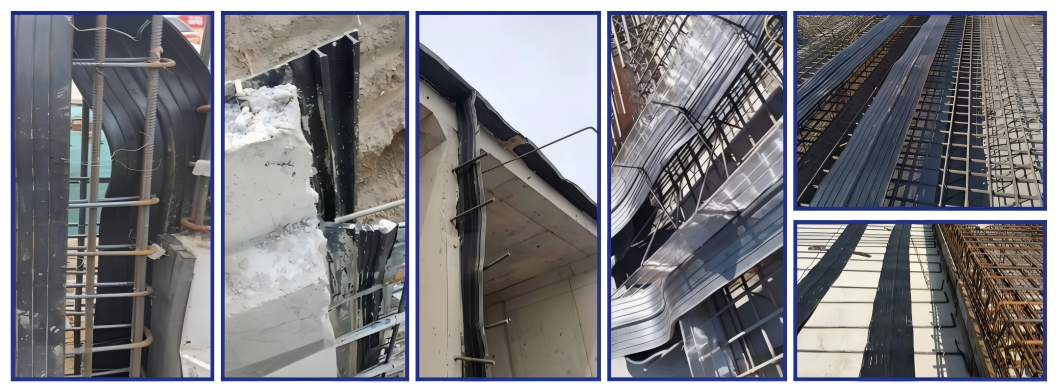
Tunnels: lining construction joints and expansion joints
Underground structures: basement floors and walls
Municipal facilities: wastewater treatment tanks and utility tunnel joints
Transportation infrastructure: subway tunnels, culverts, bridge expansion devices
Industrial buildings: chemical plant floor joints, plating workshop floor joints
Packaging
FAQ
What is the lead time for rubber waterstops?
For standard specifications, production is typically completed within 10 to 20 days after order confirmation. The exact lead time depends on order quantity, specifications, and raw material availability. Custom products are scheduled based on production planning.
Can rubber waterstops be customized?
Yes. Parameters such as cross-sectional shape, dimensions, length, and hardness can be customized based on project drawings and technical requirements.
What is the quality assurance for the products?
We provide quality assurance for finished products. From raw material procurement and production process control to pre-shipment inspection, all steps are carried out in accordance with standards to ensure product performance meets technical specifications. Material certificates and test reports are available upon request.
What management system certifications does your company hold?
The company has established and operates an integrated management system, certified for quality management (ISO 9001), environmental management (ISO 14001), and occupational health and safety management (ISO 45001).
What is the typical service life of rubber waterstop?
Under normal working conditions and proper installation, rubber waterstop provides long-term service life. The actual service life depends on environmental factors such as temperature, chemical exposure, and mechanical stress. High-quality rubber material with good aging resistance contributes to extended durability.
How to install a rubber waterstop correctly?
Position the waterstop at the designed location across the construction or expansion joint before concrete is poured. Ensure it is centered and secured to prevent displacement during casting. Avoid sharp objects that may damage the waterstop. For detailed instructions, refer to the product installation guide or contact technical support.
How should rubber waterstops be stored?
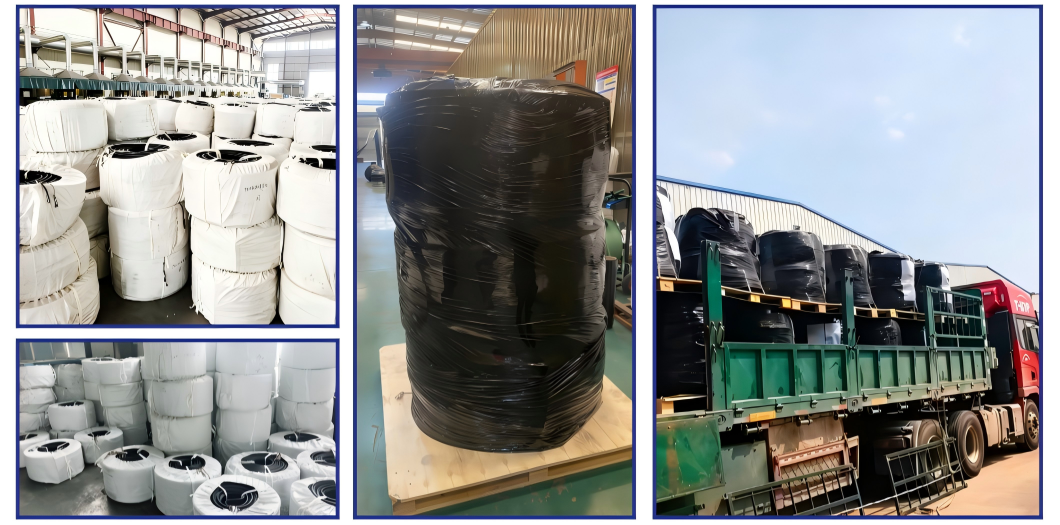
Store rubber waterstops in a cool, dry, ventilated place away from direct sunlight. Avoid contact with acids, alkalis, oils, grease, and organic solvents. When stored properly, the product maintains its performance for an extended period.


