

close
Choose Your Site
Global
Social Media
Views: 0 Author: Site Editor Publish Time: 2026-07-03 Origin: Site


Premature joint failure rarely stems from a simple material defect. Instead, it acts as a compounding financial risk for property developers and facility managers. Weak structural seals trigger costly exterior rework, allow severe water ingress damage, and cascade into massive project delays. Polyurethane serves as the undisputed industry standard for sealing dynamic structural gaps. However, selecting the precise grade, modulus, and chemical makeup dictates your seal's actual lifespan in the field.
A minor miscalculation in your specification leaves building envelopes highly vulnerable to catastrophic leaks. Decision-makers must bridge the gap between theoretical data sheets and actual job site conditions. This article provides project managers, structural engineers, and procurement teams with an objective evaluation framework. We will explore how to match specific chemical formulations to highly demanding site environments. Read on to master structural joint design constraints, distinct curing mechanisms, and stringent compliance standards for modern infrastructure.
Selecting a polyurethane sealant for construction joints requires matching the material’s modulus and movement accommodation factor (MAF) to the specific joint design and thermal load.
One-component (1K) formulations prioritize ease of use, while two-component (2K) formulations are necessary for rapid curing in high-volume or climate-sensitive applications.
Long-term construction joint waterproofing depends heavily on verifiable compliance with industry standards (e.g., ASTM C920) and stringent substrate preparation.
Evaluating a building sealant supplier on technical support, batch consistency, and supply chain reliability is just as critical as the product's technical data sheet (TDS).
Dynamic expansion joints undergo constant thermal and structural movement. Concrete slabs absorb immense solar heat during summer days. They expand aggressively and push joint faces together. During freezing winters, these same slabs contract and pull the joint faces apart. Specifying an inflexible or incompatible material leads directly to cohesive or adhesive failure.
Cohesive failure tears the material apart internally. The polymer simply cannot withstand the stretching force. Adhesive failure strips the material away from the concrete substrate itself. Both scenarios leave the structural gap fully exposed to the elements. Once a failure occurs, the building envelope loses its integrity.
You must view construction joint waterproofing as a critical line of defense. Minor breaches allow moisture to penetrate behind cladding, brick masonry, or precast exterior panels. Freeze-thaw cycles then turn this trapped moisture into ice. The expanding ice spalls the concrete block, requiring major structural repair. Over time, persistent water ingress corrodes reinforcing steel rebar and ruins costly interior finishes. Fixing these deep structural leaks often requires expensive facade access equipment and road closures. Treat joint design as an integrated defense system rather than a last-minute aesthetic afterthought.
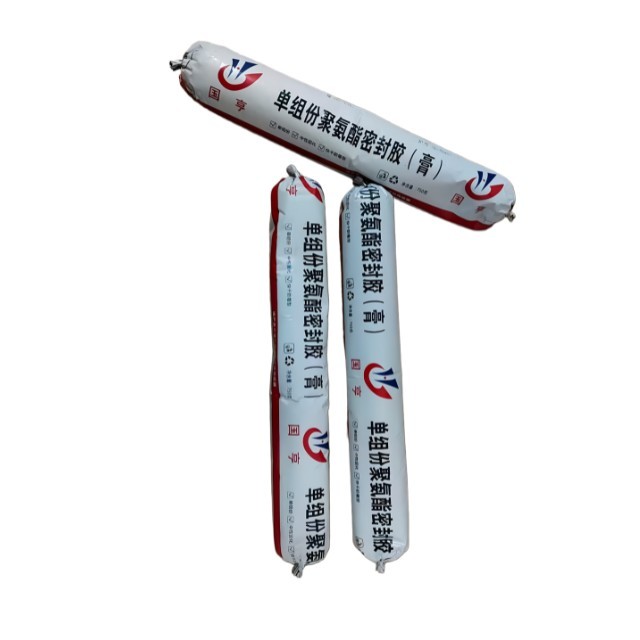
Contractors generally choose between one-component (1K) and two-component (2K) formulations. Each chemistry serves distinct operational workflows. You must align your material choice with available field labor, site climate conditions, and overall project scale.
A 1-component polyurethane joint sealant relies entirely on ambient moisture to cure. You apply it directly from the cartridge or foil sausage without any preliminary mixing. This simplicity makes it ideal for smaller residential projects and complex architectural geometries. It prioritizes labor efficiency on site. Crews avoid costly mixing errors entirely. However, these 1K systems have distinct chemical limitations. They feature slower, depth-dependent curing times. These moisture-curing polymers pull humidity directly from the air. In arid environments, a 1K material might take multiple days to cure fully.
Alternatively, 2-component systems utilize a precise chemical cure. Crews mix a base polymer material and a chemical activator directly on site. This triggers a rapid, uniform exothermic reaction. Large-scale commercial applications and exceptionally wide gaps benefit greatly from 2K systems. They allow rapid traffic return. You gain tight control over the curing timeline. This proves invaluable when sealing highway bridge joints where you must restore vehicular traffic within hours. You can also achieve specific color-matching on site by adding custom tint pastes to the unmixed base. The primary risk involves strict mixing protocols. Poor mixing creates unreacted wet pockets or causes outgassing bubbles.
System Comparison Overview
| System Type | Curing Mechanism | Ideal Project Applications | Primary Limitations |
|---|---|---|---|
| 1-Component (1K) | Ambient moisture-cured | Smaller projects, vertical facades, complex geometries | Slower cure rate, highly dependent on local humidity |
| 2-Component (2K) | Chemical activator mixing | Large-scale, wide joints, fast traffic return | Requires strict on-site mixing protocols and equipment |
Selecting a precise polyurethane sealant for construction joints demands technical rigor. You cannot rely on generic datasheets alone. Evaluate materials across three specific dimensions to guarantee long-term performance.
First, strictly assess modulus and movement capability. Modulus refers to the force required to stretch the material. Low modulus materials feature a lower Shore A hardness. They stretch easily and accommodate highly dynamic joints. They apply far less stress on the concrete bond line during expansion. High modulus variants resist puncture and shear forces. They suit high-traffic horizontal gaps like parking decks or warehouse floors. Always verify the Movement Accommodation Factor (MAF). A standard commercial rating ranges from ±25% to ±50%. You must match the MAF to your structural engineer's anticipated thermal load.
Second, evaluate substrate compatibility and adhesion mechanics. Polyurethane chemistry excels on porous substrates like rough concrete and brick masonry. However, performance drops significantly on non-porous surfaces like polished metal or glass without specific chemical preparation. Determine primer dependencies early during the bidding phase. Treat a chemical primer as a strict requirement rather than an optional accessory for critical structural gaps. The primer chemically binds the substrate pores to the urethane polymer.
Third, assess durability and environmental weathering resistance. Standard polyurethane chalks or discolors heavily under direct UV exposure. If visual aesthetics matter, specify an aliphatic polyurethane topcoat. Aliphatic formulas resist UV degradation. For horizontal pedestrian or heavy vehicular traffic joints, evaluate puncture and abrasion resistance. High Shore A hardness ratings indicate better resistance to street sweepers, snowplows, and commercial vehicle tires.
Procurement teams must standardize their technical specifications. Relying on normative standards eliminates engineering guesswork. Industry benchmarks like ASTM C920 dictate specific Type, Grade, Class, and Use parameters. For example, an ASTM C920 'Use T' rating indicates pedestrian or vehicular traffic suitability. A 'Class 35' rating means the material handles 35% expansion and contraction. ISO 11600 provides a similar global standardization framework. Shortlisting products based on these verified frameworks ensures baseline quality.
Sustainability mandates now shape modern material selection. Evaluate formulations for low-VOC (Volatile Organic Compound) emissions. Compliance with green building certifications, such as LEED v4, proves essential for new commercial developments. Low-VOC materials protect installer respiratory health. They also dramatically improve indoor air quality for building occupants once the project opens.
Learn to read a Technical Data Sheet (TDS) skeptically. Manufacturers test their products under ideal, controlled laboratory conditions. They usually cure materials at a perfect 23°C (73°F) and 50% relative humidity. Reality looks much different on a freezing, wind-swept construction site. Look closely at the testing parameters rather than just the bold marketing claims. Ask the manufacturer for performance data under extreme temperature variations or extended water immersion.
Even perfect polymer chemistry fails under poor field application. Surface preparation realities dictate your ultimate success. Industry field data shows 90% of adhesive failures stem from poor surface prep. Laitance, concrete dust, or hidden moisture on the substrate destroys the bond line completely. Crews must mechanically grind or wire-brush the joint faces. They must blow out the residual dust using oil-free compressed air before application.
Joint design constraints remain equally rigid. You must maintain a precise width-to-depth ratio inside the gap. Engineers typically mandate a standard 2:1 ratio. You also need closed-cell polyethylene backer rods. These rods control the liquid sealant depth. More importantly, they prevent three-sided adhesion. If the material bonds to the bottom of the joint cavity, it cannot stretch freely. This mechanical restriction causes immediate cohesive tearing under normal stress.
Environmental curing risks constantly threaten installation integrity. Sudden temperature drops halt the chemical cross-linking process. Excessive ambient humidity or premature exposure to heavy rain compromises the final mechanical properties. Always monitor local weather windows closely. Stop installation immediately if ambient temperatures fall below the manufacturer's recommended baseline. Use temporary weather covers to protect freshly applied joints from sudden downpours until they skin over.
Choosing the right building sealant supplier is just as critical as selecting the chemistry itself. A technical data sheet cannot answer emergency phone calls from the job site. Evaluate potential partners based on their holistic support ecosystem.
Start by testing their technical support capacity. Does the supplier offer project-specific adhesion testing? Will their engineers conduct architectural joint design reviews? Strong manufacturing partners provide on-site technical guidance. They send field engineers to train your crews on proper tooling techniques and primer application.
Next, assess batch consistency and quality control standards. Examine the manufacturer's internal quality assurance processes. Poor manufacturing leads to frustrating viscosity variations. It causes premature curing inside the foil packaging. Consistent factory batches guarantee predictable curing times on site.
Finally, evaluate supply chain scalability. Large commercial builds require strict, phased delivery schedules. Ensure your partner easily handles high-volume orders without causing site delays. Supply chain disruptions idle entire construction crews, driving up labor costs. Procurement teams should implement a clear four-step vetting process:
Request comprehensive material sample kits.
Build physical mock-ups on the actual job site.
Initiate adhesion compatibility pull-testing with your project-specific substrates.
Review the final laboratory testing reports before signing the bulk purchase order.
Successful structural sealing requires a highly holistic approach. It combines correct polymer chemistry, rigorous joint design, and flawless field execution. Failing in any single area compromises the entire building envelope. Decision-makers must prioritize long-term movement capability and supplier technical backing over initial material costs. Do not sacrifice long-term waterproofing performance for a marginally cheaper cartridge.
Your team must carefully align modulus ratings, chemical curing mechanisms, and ASTM standards with the physical realities of your job site. Take control of your next major installation by demanding rigorous field testing and exact substrate matching. Consult a technical sales engineer today. Request a customized product recommendation and a site-specific TDS review to protect your infrastructure investment.
A: Typically 10 to 20 years, highly dependent on UV exposure, joint movement frequency, and initial installation quality.
A: Yes, unlike silicone, most polyurethane sealants are paintable. However, the paint must be flexible enough to accommodate joint movement without cracking.
A: Usually caused by moisture trapped in the substrate reacting with the sealant during curing (outgassing), or applying the sealant when substrate temperatures are rapidly rising.
A: Polyurethane offers superior abrasion resistance, paintability, and adhesion to porous substrates like concrete, making it ideal for civil and heavy construction. Silicone offers better extreme UV and temperature resistance but is generally unpaintable and prone to dirt pickup.

