

close
Choose Your Site
Global
Social Media
Views: 0 Author: Site Editor Publish Time: 2026-04-22 Origin: Site


In concrete structure engineering, the selection of waterstops directly affects waterproofing effectiveness and structural durability. Rubber waterstops and steel-edged rubber waterstops are two common types, each with differences in material composition, performance characteristics, and applicable scenarios. Proper selection requires comprehensive consideration of project conditions, structural deformation characteristics, and construction requirements.

Material Composition and Structural Differences
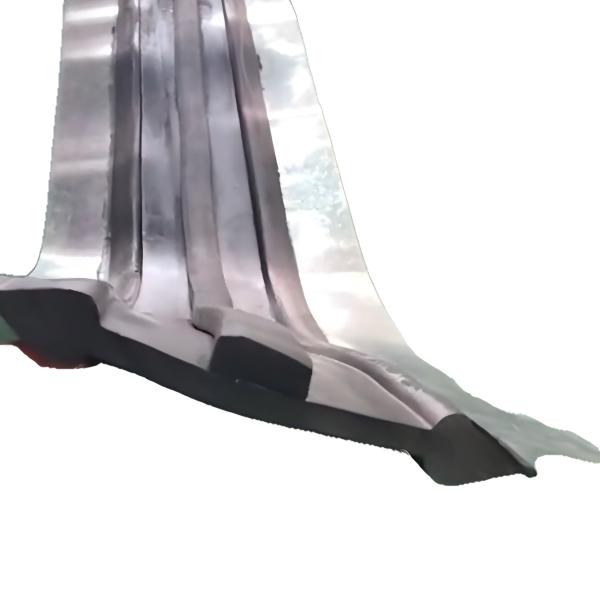
Rubber waterstops are made from natural or synthetic rubber, such as EPDM or neoprene, forming a single elastomer with various cross-sectional shapes. Steel-edged rubber waterstops incorporate steel plates embedded along the edges of the rubber body, creating a composite structure combining rubber and metal. The steel edges enhance the bonding capacity between the waterstop and concrete, while also improving overall tensile strength.
Performance Characteristics Comparison
Rubber waterstops offer good elasticity and flexibility, allowing them to accommodate structural displacement caused by temperature changes, settlement, or seismic activity. Their sealing performance relies primarily on the compression-rebound properties of the rubber. They have relatively moderate installation interface requirements and conform well to concrete. Under conventional conditions, rubber waterstops maintain stable performance over extended periods.
Steel-edged rubber waterstops retain the elasticity of rubber while adding anchoring capability through the steel edges. Perforations or raised patterns on the steel edges further improve bonding with concrete. In areas with significant structural deformation or higher water pressure, the steel-edge design helps reduce the risk of separation between the waterstop and the concrete interface. Additionally, the steel edges facilitate positioning during installation, reducing the likelihood of distortion or displacement.
Applicable Scenarios and Selection Recommendations
Rubber waterstops are suitable for general underground works, tunnels, and wastewater treatment plants where deformation adaptability is required. Under conditions with manageable deformation and moderate water pressure, their overall performance meets project needs. Their relatively straightforward installation contributes to shorter construction schedules.
Steel-edged rubber waterstops are often used in projects with higher waterproofing requirements, more complex structural deformation, or greater water pressure, such as large basement slabs, subway stations, and hydraulic facilities. In structures subject to significant tensile stress or potential uneven settlement, the steel-edge design offers more reliable anchoring.
Selection Considerations
Selection should be evaluated from the following aspects:
Structural Deformation Characteristics: For areas with substantial deformation or uncertain displacement direction, the anchoring capacity of steel-edged rubber waterstops provides advantages.
Construction Conditions: Rubber waterstops have relatively lower demands for construction precision, making them suitable for projects with complex site conditions; steel-edged rubber waterstops require attention to the fixing method between steel edges and reinforcement bars.
Cost Factors: Rubber waterstops have relatively lower material costs; steel-edged rubber waterstops involve slightly higher costs due to composite structure and processing techniques.
Long-Term Performance: Both types maintain stable performance under normal use conditions, though steel-edged rubber waterstops offer certain advantages in interface bonding.
Conclusion
Rubber waterstops and steel-edged rubber waterstops each have distinct characteristics and are suited to different scenarios. Designers and construction teams should select the appropriate type based on project-specific conditions, including structural deformation characteristics, waterproofing requirements, construction conditions, and economic factors, while also ensuring installation quality to achieve the intended waterproofing outcomes.


