

close
Choose Your Site
Global
Social Media
Views: 0 Author: Site Editor Publish Time: 2026-03-14 Origin: Site


Sealants are essential materials in construction, manufacturing, and various industrial applications. They fill gaps, prevent water and air infiltration, and protect structures from environmental damage. Among the many types of sealants available, polyurethane and polysulfide sealants are two commonly used products. While they may appear similar at first glance, they have distinct characteristics that make them suitable for different applications. Understanding these differences is crucial for selecting the right material to ensure project quality, durability, and safety. This article provides a detailed comparison of polyurethane and polysulfide sealants, covering their similarities, differences, and typical uses.
Both polyurethane and polysulfide sealants share an important common feature: they are available in both single-component and two-component formulations. This similarity in product forms provides users with flexibility depending on project requirements.
Single-component sealants are pre-mixed and packaged in cartridges, sausages, or pails. They are ready to use immediately upon opening, requiring no additional mixing or preparation. This convenience makes them ideal for small to medium-sized projects, field applications, and situations where simplicity and speed are valued. They cure by reacting with moisture in the air, which means curing time can vary depending on humidity and temperature conditions.
Two-component sealants consist of a base compound and a curing agent that must be thoroughly mixed in precise proportions before application. While this requires additional equipment and careful attention to mixing ratios, two-component systems offer certain advantages. They typically cure faster, can achieve deeper section cure, and often provide enhanced mechanical properties or chemical resistance compared to their single-component counterparts. These characteristics make them preferred choices for large-scale projects, industrial applications, and environments demanding superior performance.
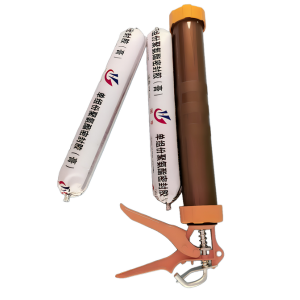
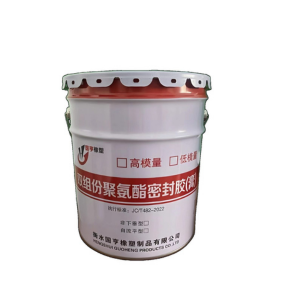
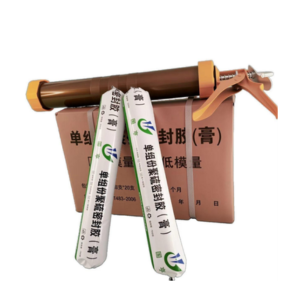
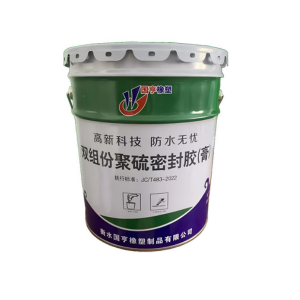
Polyurethane sealants are synthetic polymer-based materials widely used in construction and general industry due to their excellent elasticity and strong adhesion.
Polyurethane sealants are commonly available in neutral colors such as black, white, and gray. These colors allow them to blend seamlessly with common building materials like concrete, metal, glass, and wood. During application and curing, polyurethane sealants typically emit a faint chemical odor. This mild odor is generally not offensive and dissipates relatively quickly under normal ventilation conditions.
Most polyurethane sealants have a paste-like consistency designed for application using manual or pneumatic caulking guns. This method enables precise placement of the sealant bead into joints, cracks, and gaps. Some formulations may also be tooled with a spatula or trowel to achieve a smooth finish. Polyurethane sealants are typically non-sag, meaning they can be applied to vertical or overhead surfaces without dripping or running.
Elasticity: Polyurethane sealants exhibit excellent flexibility and recovery. They can accommodate significant joint movement caused by thermal expansion, contraction, vibration, or structural settling without losing adhesion or tearing.
Adhesion: They bond strongly to a wide variety of substrates, including concrete, masonry, metals, wood, and many plastics. Proper surface preparation and priming may enhance adhesion on certain materials.
Durability: Polyurethane sealants resist weathering, UV radiation, and abrasion, providing long-term service life in exterior applications.
Paintability: Most polyurethane sealants can be painted over, allowing for color matching with surrounding surfaces.
Due to their elastic and adhesive properties, polyurethane sealants are commonly used in:
Building facades and curtain wall joints
Expansion joints in concrete roads, bridges, and airport runways
Joints in precast concrete panels
General construction applications where movement is expected
These applications benefit from the sealant's ability to prevent water and dust infiltration while reducing air penetration through gaps.
Polysulfide sealants are based on liquid polysulfide polymers and have been used for decades in specialized applications requiring exceptional chemical resistance and impermeability.
Polysulfide sealants are predominantly available in black or gray shades. One of their distinguishing features is a stronger, more noticeable odor compared to polyurethane sealants. This characteristic odor is inherent to the material and is considered a normal property, not an indication of poor quality or toxicity. However, adequate ventilation is recommended during application to ensure comfort and safety.
Polysulfide sealants can be supplied in various consistencies, including gun-grade for vertical applications and self-leveling for horizontal surfaces. Application methods include using caulking guns for precise placement or spatulas and knives for spreading and tooling. Two-component polysulfides are very common and require thorough mechanical mixing to activate the curing reaction. Once mixed, they have a limited pot life and must be applied within that timeframe.
Chemical Resistance: Polysulfide sealants offer outstanding resistance to a wide range of chemicals, including fuels, oils, solvents, dilute acids, and alkalis. This makes them indispensable in environments where exposure to such substances is likely.
Impermeability: They have very low moisture vapor transmission and excellent resistance to gas permeation, forming an extremely effective barrier against water, air, and other gases.
Weathering Resistance: They exhibit excellent long-term resistance to UV light, ozone, and extreme temperatures, maintaining their properties over decades of outdoor exposure.
Adhesion: They adhere well to many substrates, particularly metals and glass, though specialized primers may be required for optimal bonding to some materials like concrete.
Due to their resistance to oil, water, and aging, polysulfide sealants are commonly used in:
Marine applications, including ship decks and hull joints
Automotive and aerospace fuel tank sealing
Oil storage tanks and pipeline joints
Industrial flooring and chemical containment areas
Sealing in refineries and chemical plants
These applications demand high-performance sealing where exposure to harsh chemicals or extreme conditions is expected.
Understanding the differences between these two sealant types is essential for making the right selection. The following points summarize the key distinctions:
Color Range: Polyurethane sealants offer a broader range of colors including black, white, and gray, while polysulfide sealants are primarily available in black and gray.
Odor: Polyurethane sealants have a faint chemical odor, whereas polysulfide sealants have a more pronounced and noticeable odor.
Application Tools: Polyurethane sealants are typically applied using caulking guns, while polysulfide sealants can be applied with guns, spatulas, or knives depending on consistency.
Mixing Requirements: Both types are available in single-component and two-component forms, but two-component polysulfides are particularly common in industrial applications.
Polyurethane: Preferred for construction, building facades, roads, bridges, and concrete joints where movement and weather resistance are primary concerns.
Polysulfide: Preferred for marine, automotive, aerospace, industrial, and chemical environments where exposure to fuels, oils, and aggressive chemicals is expected.
Selecting the appropriate sealant material depends on the specific requirements of your project. Consider the following factors when making your decision:
If your project involves building facades, concrete expansion joints, or areas subject to significant movement, polyurethane sealant is typically the better choice. Its excellent elasticity and strong adhesion to common building materials will ensure long-term performance and prevent water and air infiltration.
If your application involves contact with fuels, oils, solvents, or aggressive chemicals, polysulfide sealant is the necessary solution. Its superior chemical resistance and impermeability will provide reliable sealing even in demanding conditions.
For smaller projects or situations where simplicity is valued, single-component versions of either sealant type offer convenience. For large-scale projects requiring fast curing and enhanced performance, two-component systems may be preferred despite the additional mixing requirements.
Polyurethane and polysulfide sealants each bring unique strengths to the table. Polyurethane sealants excel in applications requiring high elasticity, strong adhesion to common building materials, and paintability, making them versatile choices for general construction and movement joints. Polysulfide sealants, with their exceptional chemical resistance and impermeability, remain the preferred materials for demanding industrial, marine, and aerospace environments where exposure to fuels and chemicals is inevitable.
By understanding these fundamental differences—from their distinct odors and colors to their performance characteristics and typical applications—professionals can make informed decisions that ensure the long-term integrity, quality, and safety of their projects. Proper material selection, combined with correct surface preparation and application techniques, is the key to maximizing the benefits of either sealant type.


